
About this day
For A-level, IB, BTEC Level 3 and T Level biology students
Join us for an exciting day of informative discussions, interactive sessions and inspirational stories at Biology in Action this autumn. From advancements in genetics to environmental challenges, our experienced speakers will shine a light on cutting-edge research and current issues from the world of biology.
The day will also include a special session on examination success designed to provide students with the tools that they need to excel. With polls and quizzes throughout the day and plenty of opportunities to ask the scientists questions, this is an unmissable day, and we look forward to welcoming you and your students. Book now for Biology in Action!
Host: Helen Pilcher (Author and Communicator) Exam Session: Leah McClure (Biology Teacher)
“Topics were close to the curriculum, current and widened student views on biological studies”
— Blackheath high school, Autumn 2023 —
Programme & speakers
King Richard III: the resolution of a 500 year old cold case Turi King, Director of the Milner Centre for Evolution, University of Bath
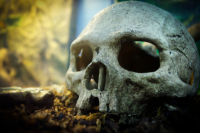
When the Grey Friars project first came about, the chances of finding the remains of Richard III were considered slim to none. Nevertheless, Turi King, with her background in archaeology and genetics, was approached – should the skeletal remains of a ‘good candidate’ be found, would she be interested in overseeing the DNA analysis? Turi will speak about this project, from planning, through to excavation and then the analyses carried out on the remains.
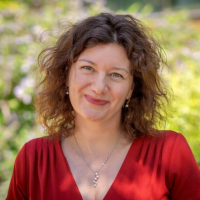
About Professor Turi King
Professor Turi King is a scientist, presenter, speaker and author who is passionate about communicating science to the public. Turi uses genetics in the fields of forensics, history, genealogy, and archaeology, and is known for ‘cracking one of the biggest forensic DNA cases in history’ – the identification of the remains of King Richard III.
Guardians of the Poles: Why the Arctic and Antarctic Matter Mark Brandon, Professor in Polar Oceanography, The Open University

Often seen as the “last untouched wilderness,” the polar regions are far from desolate. Join Mark as he explores the stunning beauty of the poles, shares his experiences working on cross-disciplinary science projects in these environments, and delves into the unique survival strategies of polar animals. Discover how these regions are vital to our climate system, why their preservation is crucial, and practical steps we can take to protect them.

About Professor Mark Brandon
Mark is an Antarctic and Arctic researcher with extensive fieldwork in both. He’s worked on The BBC series Frozen Planet I and II, and Blue Planet II, given evidence in the UK Parliament on the Arctic and was a Special Adviser to the Environmental Audit Committee in the House of Commons. In 2020 he was honoured with an MBE for services to polar science, and in 2024 awarded The Polar Medal.
Is it worth it? Helen Pilcher, Author and Science Communicator

There are only two northern white rhinos left. Saving them will involve some cutting edge biology, but it’s going to be challenging and very expensive. So is it worth it? Which species would you choose to save, and which would you let go? Join Helen as she discusses the dilemmas posed by modern day conservation.

About Dr Helen Pilcher
Dr Helen Pilcher is a tea-drinking, biscuit-nibbling science and comedy writer. Her books include Bring Back the King: the Science of De-extinction, Life Changing: How Humans are Altering Life on Earth and This Book May Cause Side Effects.
Astrobiology – The Hunt for Alien Life Lewis Dartnell, University of Westminster

‘Astrobiology’ is the scientific search for life beyond our planet. Tour the planets and moons in our solar system which may offer the best hope, and further afield to alien worlds we’ve discovered around distant stars. Are we alone in the cosmos?

About Professor Lewis Dartnell
Lewis is an astrobiologist studying how microbial life might persist on the surface of Mars. He appears regularly on the BBC, National Geographic and Discovery channels.
Targeting tau tangles - the race to cure dementia Kevin Moffat, University of Warwick
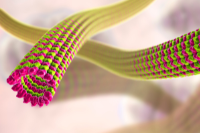
Ageing populations increase dementia cases, notably Alzheimer’s Disease. The first glimpses of potential cures have just been achieved. However, we need better medication, diagnostics, and treatment. Tau protein and its toxic oligomeric form is such a target. Come with me to recognise its use in diagnostics, its actions inside neurons and across synapses – we must understand it if we’re to stop it.

About Dr Kevin Moffat
Kevin has been a geneticist for over forty years and is now an Emeritus Professor at the University of Warwick. Initially developing tools to structure function map brains, more recently he has been using the fruit fly, Drosophila, to model neurodegenerative disease. His research encompassed neuroscience, physiology, biochemistry and genetics.